It’s late. I have promised myself to keep this post short.
I keep saying I will record my ruminations in a journal, make lists, notes, etc. in order not to forget the details of my IMof Collective projects (I have a few already in process). Someone said to me, “why write it down? why not just make that the blog?”
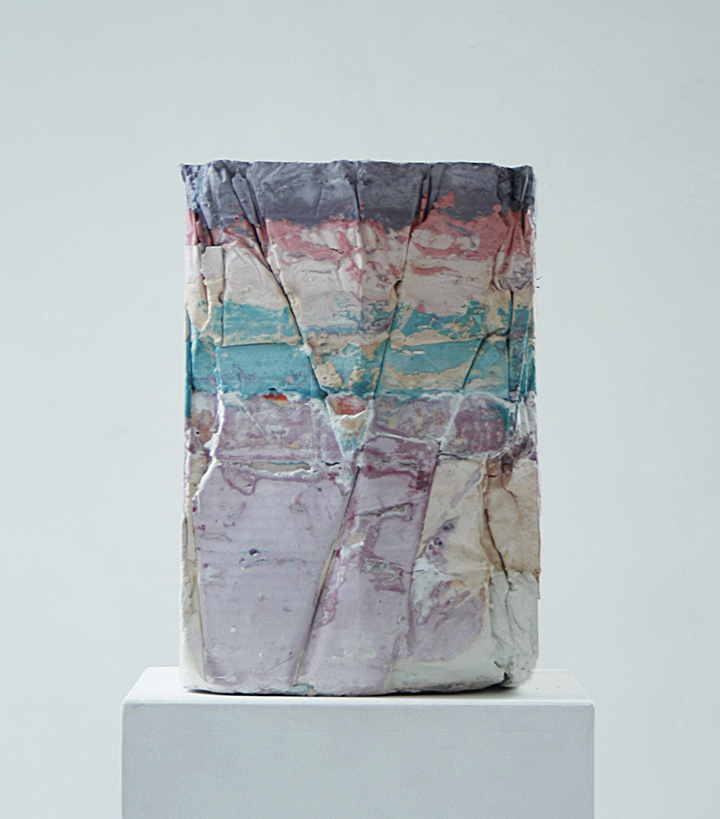
I’m considering how best to make pedestals for exterior installations. I prefer to wait a blog or two before I elaborate on the finer details of this specific project. Today, I am focused on a few technical considerations concerning public art in general. It just so happens that I have currently been constructing pedestals out of plaster-of-paris and acrylic. It is the construction of pedestals that leads me to ask these questions:
- How well will plaster-of-paris hold up outdoors in humid conditions? Note: I’m no fool. I know its life is limited. It is porous, after all. I also know that if I place a sculpture in the public domain, it is liable to be removed at any moment. So this is what leads me to my second question…
- How essential is the longevity of self-installed public art? Is it a real consideration? Note: Grad school installed in me a real-life awareness of long-term investment in my work. I try to consider what materials are most practical, and most congruous with their environment. I have considered experimenting with pigmented concrete and done a bit of research into the topic (although I am always open to more input, should you desire to share). Concrete would provide a logical base on which to build New York City shrines. However, working with it means learning a new process, new material expenses, more mess, and on and on. Sigh………we artists aren’t usually renown for our simplicity.
Here is a random online link I found with input on mixing concrete:
http://www.familyhandyman.com/masonry/pouring-concrete/how-to-properly-mix-concrete/view-all
And here is a very informative overview of the history and technique of mixing color into concrete:
http://www.concretenetwork.com/chris_sullivan/colored_concrete.htm
Part of me is saying, “fuck it, stick to your current trajectory and focus on figuring out ways to make plaster more resilient, though not immortal.”
I looked up ways of sealing plaster sculpture and found a couple of forums in which Boat Resin and polyeurethane were recommended (both disgustingly toxic, so far as I know). I may try anyways (with the help of gloves and mask), and see what happens. I am currently casting more pedestals, and once they are dried and coated I will post the results.
It may be awhile before you see those. although I DID happen upon a post describing the process of speed-drying plaster molds in the oven.
Good or bad idea?!
-Aria Doner Tudanger
ariatudanger@gmail.com
 IMofCollective