The Provence Project (2nd Installment)

The IMofCollective (In Memory of Collective): is an organization composed of individuals employing artistic means to mark choice locations, memorializing their life experiences.

I originally launched this blog with a post about the Provence installation, and I am committed to keeping up the thread of both this project and the Soho project. Thus, I have returned to the discussion concerning the memorial plaques (some of which are shown below) that I plan to install this June.
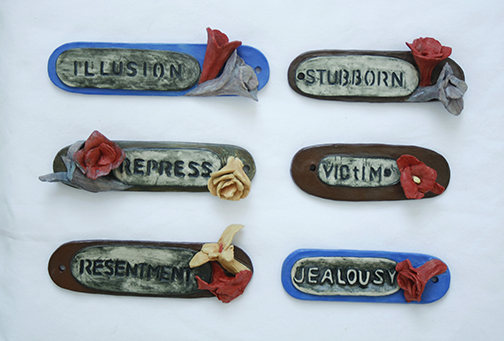
 

IMofCollectiveMarkers1


Each of these markers (varying in length from approximately 4″-6″) is intended to commemorate, or in some cases facilitate the letting go of parts of myself. They represent personality traits that I consider to be problematic in a relationship dynamic.

“Why install these in Provence?” You might ask. That is an important question and the perfect opportunity to segue into my focus for today’s blog:

Location, Location, Location.

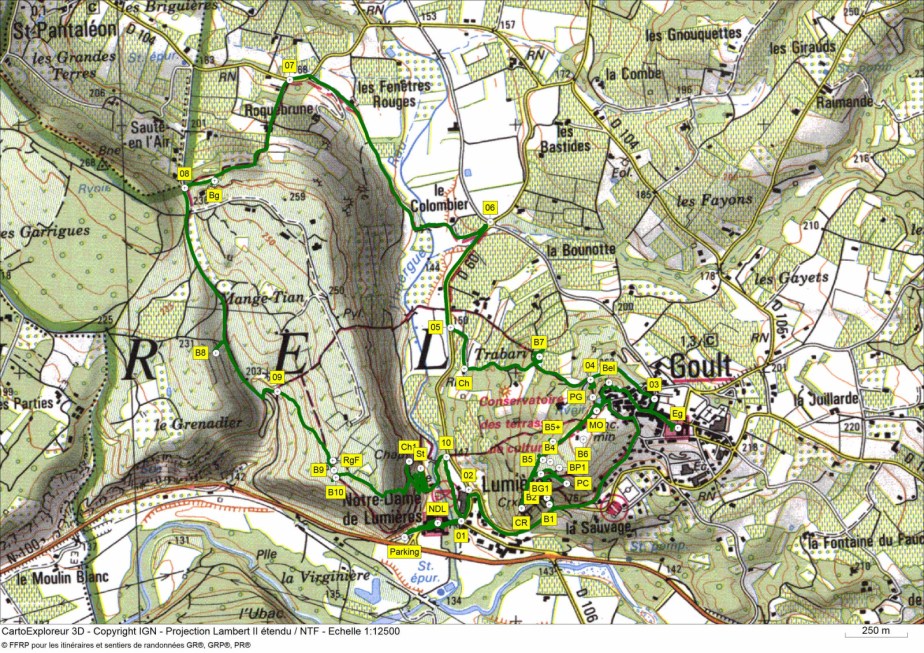
I lived in Provence for five years, experienced huge life changes there, was married, divorced, made lifelong friends, in sum feel that a part of me will forever be connected to this special place. In truth it’s not one location. It’s many points of reference, condensed into a territory of approximately 20×5 miles, which is often referred to as the Luberon Valley. Considering the relative immensity of this area to the space inhabited by Soho, NY (the target of my other IMofCollective project) it might seem daunting to try to pick out a handful of spots that are of particular importance to me.
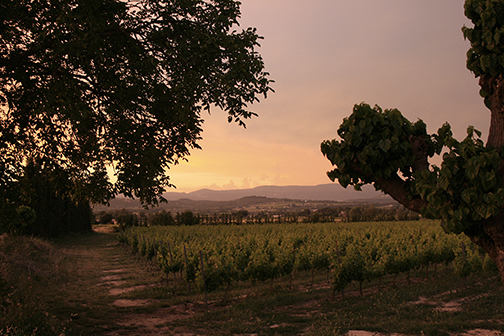
Magenta Sunset
Bonnieux, France.

However, as I reminisce the memories come flooding back at the flip of a switch, and I immediately begin to hone in on some definite contenders.

This list (keep an eye out for it in my next Provence installment) represents the first memories to come to mind but there are so many, filled with happiness and sadness, love and longing, every imaginable emotion. Some spots are associated with other people, a shared experience. Others with a song or album that I was obsessed with at the time.

Sometimes a smell (such as wild thyme or burning leaves and firewood) can immediately catapult me into my past in Provence. Isn’t smell transporting?! I’m just saying.

The process of simply envisioning memories is rewarding. How can I NOT expand my IMofCollective projects into this region? It provides me with an opportunity to re-experience moments of significance in my life, and integrates the structure necessary to make something of those memories, to turn them into something new.

You might be wondering, “what inspired me to give the markers this particular form?”
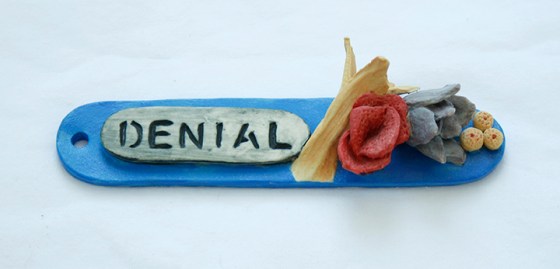
Denial_IMOC
Denial. Clay.6″x2″.2016.


In the case of public installation I consider it a worthwhile challenge to reference the environment in which a piece is to be installed. In this case, I have drawn from the aesthetic of the grave markers commonly seen dotting tombstones in France.

While living in Goult, a small village on a hill, I frequented the graveyard. Every village has a graveyard but this one is unusual in that the flora is manicured in a topiary style uncommon to the region. There is something very quirky and artistic to its layout that creates a feeling different from the usual sombre cast of a graveyard. Memorials, gifts to the deceased from friends and family, can be found by the hundreds, possibly thousands. Each one is unique, while still adhering to a broad formula for shape and size.

Here are two examples:


My “letting-go”memorials mimic the style of these tombstone memorials, and so reflect their connection to the region in which they will eventually rest.
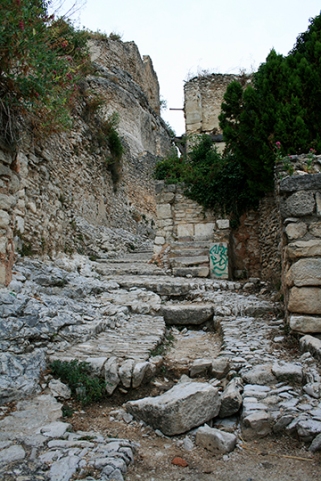
 

Rustrel
Rustrel Ruins, France.

It is the emotional and spiritual bond of people to a particular location that is an essential component of the IMofCollective. I want other people to share their memories, in countless locations around the world. There is no location too obscure. There is no such thing as a boring location. It is the individual experience and the voicing of that experience that makes a location special.

You might choose only to create memorials for various spots in your bedroom. I just hope that you will talk to a friend about it, or (even better) post a photo to the IMofCollective Facebook page and accompany the image with a brief description. That’s all it takes in this day and age to make your memory a collective one.
The Soho Project


th
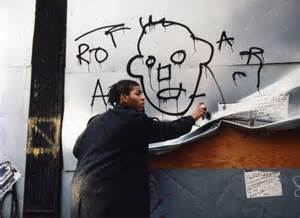
Jean-Michel Basquiat, circa 1980’s.


What is the “In Memory of Collective”?

Definition;  the IMofCollective is an organization composed of individuals employing artistic expression to mark a location. The choice of location is initially personal, honoring the unique memory and perspective of the creator. Once it has been consecrated as public art it becomes part of a wider audience, reborn as a fresh experience.

When I read this definition it dawns on me that the IMofCollective includes not only the artists voicing their experiences. It includes, in equal part, the people who interact with the work, photograph it, or are simply moved by it. To those of you regularly making public art this concept is probably self-evident. Public art is, by definition, collective art. Being new to this particular process I am embarrassed to admit that when I came up with the name the IMofCollective, I was thinking primarily of the people constructing the installations. I am already learning so much.

Follow effective action with quiet reflection. From the quiet reflection will come even more effective action.                                                        -Peter Drucker

Soon I expect to have a renewed appreciation for social media platforms, on which the broader Collective can contribute. I’m really looking forward to learning from other people as well as from my own process.

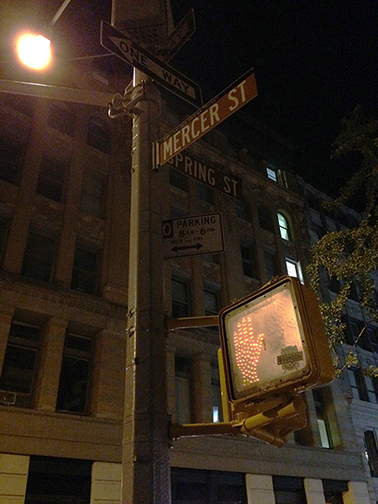
I mentioned in an earlier post that I would eventually elaborate on my New York IMofCollective project. The header image for this blog (a nighttime shot of the intersection of Spring and Mercer, the corner where I grew up) is a nod to my past, and to that of countless artists living and expressing themselves in the Soho of the 1980’s. To those of you lucky enough to grow up downtown, you know that graffiti, sculpture, and various other manifestations of public art were part of your daily experience. As soon as I was old enough to walk home from school (PS3 on Hudson street) I would drop into the galleries  to take in a quick exhibition. Art was accessible. It was commercial but it was also free. The streets with their buildings, pavement, lampposts, etc. were the platform for people to voice their opinions. And they did, in every shape imaginable.

What about the unnamed artists? Does anyone remember the footprint guy? For years, the sidewalks of Soho (and elsewhere, I imagine) were dotted with flourescent painted footprints. I could follow the feet, from the exit of the 6 Train on Spring and Lafayette, directly to my front door. One day a sidewalk would be empty, and the next there they would be, leading us somewhere exciting, telling a story about a voyage that was soon to become ours. My friends and I would wonder who this footprint guy was. Someone once told me that they had spotted him late one night riding a bike, with feet (made of what?) rigged to the spokes of his bike, magically applying paint as he pedaled along his path.

Reminiscing recently  with my friend Daniela, she told me that the artist’s name was Adam Purple, and that we were friends with his son. Who knew?! That was the world we lived in, an intimate setting where artistic blood ran deeper then we could possibly imagine.


This is one mystery solved, but what of the countless other artists that unknowingly shaped me and my friends? What about the artist that created those amazing wire sculptures hung high on corner lampposts. We used to marvel at how in the world he/she had manged to touch the sky. How many people created the ever-changing landscape of graffiti dotting the walls across Mercer street, so lovingly observed from the fire escape on my bedroom window?


Here is a fascinating article written by my friend Kyle Spencer for the New York Times. It describes a project (begun by a Yukie Ohta) memorializing Soho:

The memories described above (and many more) form an integral part of who I am, and so directly influence ideas for installing work in my old stomping grounds.

As I continue to scope out locations and plan out the work, I will continue to post the process. Stay tuned for more, and please feel free to share those neighborhood stories you hold close to your heart. I can’t wait to see them come to the surface.

-Aria Doner Tudanger

http://www.ariatelier.net

ariatudanger@gmail.com